
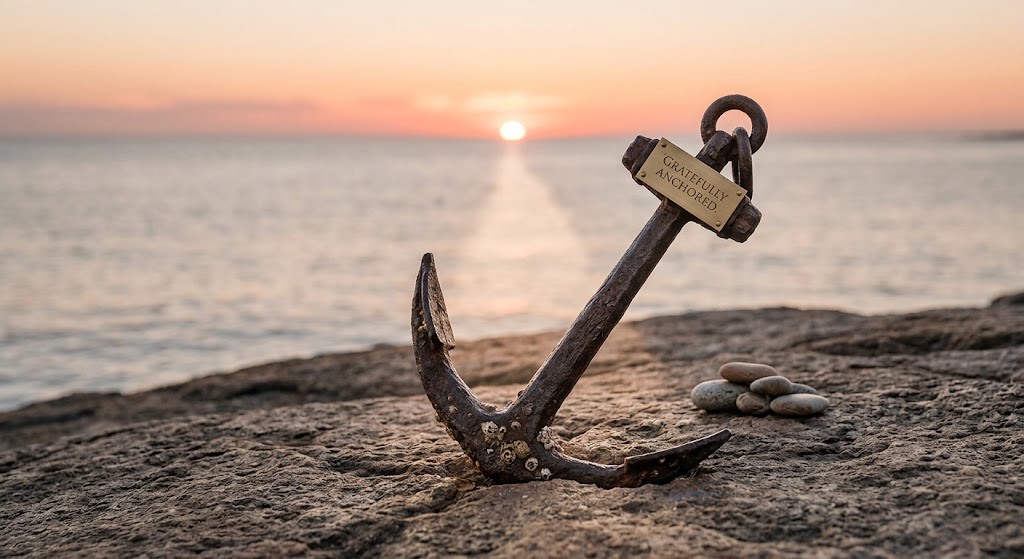
I want to take more things for granted.
I know how that sounds. We grow up hearing that we should never take anything for granted. We’re warned that doing so makes us careless, entitled, and ungrateful. For a long time, I believed that too – assuming that taking something for granted meant losing appreciation for it.
I don’t view it that way anymore. Today, I view taking certain things for granted as the ultimate signal of stability, security, and peace of mind. When rooted in intentional effort and deep gratitude, taking something for granted isn’t reckless – it’s a privilege we earn over time. And, personally, I aspire to earn the privilege of doing more of it, with gratitude.
Gratitude remains core to who I am. My parents instilled that value in me early, and it guides my perspective every day. Not a day goes by when I don’t express thanks for my good fortune. But I’m also comfortable celebrating the areas of life that don’t consume me with constant anxiety:
- Personal Safety & Home: I don’t go to bed worrying about physical security. I take it for granted that my home is safe and our community is secure.
- Marriage & Partnership: I take it for granted that the life my wife and I have built together will continue to endure. We didn’t arrive here by accident; we built it through thousands of small, daily choices. We continue to prioritize each other. We remain committed to each other.
- Health & Vitality: By consistently prioritizing sleep, nutrition, and movement, I take it for granted that my body will serve me well today and maximize my healthspan over time. Lifespan is a different story, as bad luck and genetics could bring things to a screeching halt for any of us.
- Financial Security: Decades of disciplined saving, smart investing, and dedicated service allow me to take our financial foundation for granted and focus on what is next. We worked hard to make retirement at 55 a reality. That retirement check we earned certainly makes it easy to sleep at night.
- Outgrowing Past Insecurities: I take it for granted that the noisy self-doubt and need for external validation that once weighed on me no longer dictate my decisions.
Taking these foundations for granted doesn’t mean neglecting them. It means having done the work to move beyond survival mode. When baseline needs are secured through intentional effort, our mental energy is freed up to focus on higher-order needs – to lead, to innovate, and to serve others.
After all, that is the ultimate goal of personal growth and leadership development: building solid ground beneath our feet so we can reach out and lift someone else.
I am grateful for my good fortune.
I am grateful for the life we have purposefully built.
I am grateful for mentors who continue to coach me along the way.
I am grateful for the noise of past insecurities I no longer listen to.
And I am grateful for the quiet confidence that allows me to take so much for granted, fully knowing I remain committed to do everything in my power not to lose that which I appreciate.
I look forward to earning the privilege of taking more of what is important for granted…with gratitude, of course.
- Of all the areas of your life currently on solid ground, what are you most grateful to take for granted?
- What persistent insecurity or worry are you actively working to overcome so you can eventually take its absence for granted?
- How can you leverage your personal stability today to serve or elevate someone else in your organization or community?



Sean, thanks for sharing your thoughts on taking thing’s for granted. I also thank God each day for the blessings I have been afforded in life. I like the idea of taking a few of those for granted while maintaining a balance without fear of the unknown.
ATB
Terry
Amen. Outgrowing fear is a great way to frame it.
Sean, slightly different view here, inspired by a book my Mother gave me many years ago. “The Wisdom of Insecurity,” by Alan Watts. I might have mentioned this book to you in context of one our previous interactions. What’s interesting is the book and its central ideas will take you to a similar place of gratitude and humility. But that journey starts not with assuming good things will persist, or that they are inherently stable. As the title suggests, the big idea is that life is fragile, we are fragile and fleeting, and any over-confident or cursory feelings of comfort should be carefully reevaluated, followed by a willing acceptance and embrace of the entirely temporary and perhaps even artificial and misleading sense of well-being and permanence. It’s a bit opposite of “taking things for granted.” Nothing at all is granted, and every day you get to experience some joy is a rather extreme and fortunate gift. Some might call it the miracle of mere existence.
I like that a lot and most certainly agree. Thank you for sharing! The main point I was attempting to make is that taking things for granted doesn’t mean we aren’t grateful or appreciative, it’s more about not having to worry about losing that which we have. I take it for granted that my car will not be stolen out of my garage overnight. That does not mean I am not grateful for the fact that I live in a safe city. Thanks again for your comment. I will put that book on my reading list.