
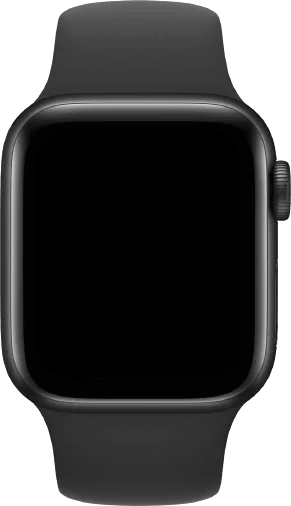
The morning ritual felt hollow. Same as every morning, I woke up and immediately reached for my wrist, expecting the familiar haptic buzz of a device ready to catalog my existence. Instead, I found a blank screen; cold, unresponsive, and seemingly resigned to its fate.
My initial reaction wasn’t one of Zen-like acceptance. It was a mild panic. How would I know if my sleep was truly “restful” without a color-coded graph to confirm it? As I was getting ready for my 0600 HIIT class, I found myself only partially joking, “If I wasn’t going to be able to measure my heart rate and recovery, should I even go?” And if I did and didn’t get digital credit, would it have even happened? My inner monologue was comical, though it served as evidence of the unhealthy emphasis I was placing on this now black screen.
Yes, I went to class and, yes, the workout did happen even though my watch didn’t log any of my steps or heartbeats. When I got home, I poured some coffee and spent twenty minutes scouring the web comparing potential replacements, ready to “optimize” my way out of this digital silence. I felt naked without my data. I felt behind.
The Weight of Measurement
I don’t know about others who place value on the insights their wearables provide, but when it comes to my fitness, I’ve largely outsourced my intuition to my wrist. I had been waiting for a “Readiness Score” to tell me if I feel tired, and I counted on my “Step Count” to see if I’ve been productive. And don’t even get me started on tracking my resting heart rate and heart rate variability (HRV)! No different from a concertgoer filming the show on their phone, I was more concerned with tracking my workouts than actually experiencing them.
Days later, while crowdsourcing recommendations for my next wearable purchase with friends, something shifted.
The anxiety of the “missing data” was replaced by a strange, quiet relief. I realized that for the first time in a long while, my heart rate was just mine. It wasn’t a data point to be compared against a rolling seven-day average; it was just the rhythm of a person enjoying a quiet Saturday.
Presence Over Points
Without the phantom vibrations on my wrist, I was more present. I wasn’t glancing down during a conversation to see a notification I didn’t need. I wasn’t “gaming” my movement just to close a digital ring and keep my streak alive. I wasn’t searching the internet to alleviate concerns about my health triggered by a data point I wasn’t aware of without the watch.
When we stop obsessing over the metrics of our performance, we create space to appreciate the simple joy of being mobile, the well-earned sweat on our brow that signifies effort, and the company of others with whom we are sweating. By focusing less on our watch’s assessment of our HRV or sleep, we bring our intentionality to the present and alleviate some of the stress our watches are creating.
The watch is still broken. I might get another one eventually, but for today, I’m enjoying the silence. It turns out I don’t need a sensor to tell me I’m alive.
- When was the last time we trusted our intuition over a digital metric?
- Which “tools” in our lives have transitioned from being helpful to being stressful?
- Might it be time to simply put away some of our tech?


Sean, this is a great article, really resonated with me.
I’ve actually gone a bit “old school” over the past few years. I still use an app, but I manually input distance and time. I don’t start or track workouts from my watch anymore.
What I’ve found is that it’s allowed me to shift my focus back to the fundamentals, step cadence, form, and breathing while running. In the weights and resistance space, I take a similar approach, intentional movement, control, and connection to the work rather than the metrics.
There’s something powerful about reclaiming that internal awareness and trusting your body again. Your post captured that tension, and the freedom on the other side, perfectly.
I’m actually in the early stages of launching a podcast called Old School, New Rules, and this is exactly the kind of topic that would naturally incubate into a great discussion.
Really enjoyed this, appreciate you sharing.
-Tori